January 29, 2010

Smells

Found here
I remember sitting on my hotel bed in Dublin watching a BBC special program about the sense of smell, and how it regulates so many aspects of life. This is a scene from that special and it cracks me up, just like it did then. And you thought your job stinks! Just try this for a couple days!

There are still so many things that one sniff can initiate. Just this morning I drove in to work the back way, out through the orange groves, through town on an historic "old money" street, then back down behind a community hospital to a historic wagon trail that is now a meandering road through a canyon, then around through another orange grove and into town where the university is. I love going that way--so much to look at. This morning there were more than sights to attend to. A skunk had been wandering across campus and left a trail of eye-watering stench behind him. Since my office had been closed up all night, the air from the vents had no place to go. Yes, my office reeked this morning and there I was, just a few moments before doing a telephone interview for my research and my eyes were swimming with the smell. I'm sure my voice sounded full of empathy as I choked and blew my nose from time to time. My African student thought it was hilarious, especially since there are no skunks in Kenya and this was an entirely new experience for her.
My older brother has a nose like a hound dog. He can detect anything. If he were not a teetotaler, he would be a wine taster. He actually has been hired in his job at a bakery to be a food technician, largely due to his sense of smell. If a product doesn't sell very well they bring it to my brother. He will taste a cookie or muffin and thoughtfully chew for a moment or two before saying, "You can't package this in styrofoam. I taste the styrofoam. It's not good." So they change it to a cardboard box and celophane and the sales go up exponentially. What a discriminating nose! He has also been known to be driving the car in a downpour, when he will scrunch up his nose and say, "Someone up ahead of us is smoking a really nasty cigar." He speeds up and sure enough, we pass a car with their windows rolled up and a man is puffing away on a big old cigar. Amazing!

There are many smells that bring me back to memories of my early life. For example, my Nana's kitchen smelled like stale coffee and kitty litter. I can still see the milk bottles from the dairy sitting at the top of the steps into the kitchen.

There is also a scent that I smell whenever I go into my mother's apartment. I can smell the old glue in the antiques that she has in addition to a musty old cedar scent--I don't know what that is, but it's strong. Mother's glaucoma eye drops have robbed her of most of her sense of smell, so she often asks me if I will come over to "smell my sweaters." She can't tell if they need to be washed. I've asked her, "Why don't you just wash them every time you wear them?" but that somehow goes against the grain, since frequent washing will ruin them. So sometimes when I drop her off at the Villa, she says impishly, "Hey...want to come up to my room and sniff my sweaters?" I roll my eyes and she throws her head back in laughter.

I well remember sitting in church next to Mother on more than one occasion when she leaned over to my father before the service started, and in a stern whisper discreetly asked, "Does this dress smell bad?" Daddy would get a glimmer in his eyes, lean into Mother and inhale deeply, choking and snorting loudly. He would sometimes fan the air or go into a fake coughing spasm. Mother's eyes would twinkle then, and she would say to me out of the corner of her mouth, "Give me strength!" and to Daddy, "Raiford! Please! Contain yourself." That would set all four of us children--and often Daddy--into fits of laughter.

I appreciate Mother's concern about how she smelled. We once attended a small church in the country. The strong body odor of one of the men would hit us in the face like a wall when we stepped inside the door of the church. One would think he would consider bathing before the Sabbath an important task. Someone tried to tactfully speak to him about it and most unfortunately, he was deeply offended and never came back. Perhaps another congregation will have more success than we had with him on this matter.

The other day I was looking through some clothes that I had tucked away for the winter, and came across a sweater of my fathers. It was sealed in a plastic bag, with a little twistee around the opening--a sign that Mother had carefully stored it away for him. For a few heavenly moments I could smell the scent of Daddy when I closed my eyes and buried my face in his sweater. It was the same scent that I noticed the last time I hugged him.

Someone once asked, "Do you know why people clink their wine glasses together?" It's because drinking wine should include all five senses: with the eye we see the color, we taste the fruity flavor, we feel it as we drink it, we hear it as we clink the glasses together. Yes, and we smell it in the glass first (that is usually what turns me off of wine, however.)

It would be difficult to live without a sense of smell. On some days, it would be a blessing to be without it. On other days, we go back to earlier times and the dearness of wonderful memories.

January 22, 2010

Places not to visit

Someone asked me the other day if I'd like to go to China for a visit. Without hesitation, I declined. There are a number of places in the world that I have no desire whatsoever to go--and this is one of them. It could be some internalized ethnocentrism or hidden prejudice of mine, but there are places that I don't want to ever visit. Here they are:
1. China
2. Japan
3. Any other Asian country
4. Russia
5. much of Eastern Europe
6. Hawaii
7. Indonesia
8. India
9. Iceland
10.Turkey
11.The Holy Lands region
12. The Gobi desert
13. The Sahara
14. The South Pacific
15. South America

So where DO I want to visit?
1. UK
2. Ireland
3. Western and Central Europe
4. Scandinavia
5. Puerto Rico
6. Bahamas
7. Jamaica
8. Alaska
9. Banff
8. Glacier National park
9. Park City, Utah
10. Anywhere in Canada

Perhaps this list reflects the changes in adventure that I have as I get older. I would have probably jumped at the opportunity to go abroad just about anywhere when I was in my 20s. Now, the inevitable has happened: I want to stay close to home for awhile. Amazing.

January 9, 2010

Just do it

The apostles said to the Lord, "Increase our faith!"
He replied, "If you have faith as a grain of mustard seed, you can say to this mulberry tree, 'Be uprooted and planted in the sea' and it will obey you. Suppose one of you had a servant plowing or looking after the sheep. Would he say to the servant when he comes in from the field, 'Come along now and sit down to eat.' Would he not rather say, 'Prepare your supper, get yourself ready and wait on me while I eat and drink; after that you may eat and drink?' Would he thank the servant becuase he did what he was told to do? So you also, when you have done everything you were told to, should say, 'We are unworthy servants; we have only done our duty. (Luke 17:6-10).

Last time I read this passage of scripture, I paused. What an unusual juxtaposition of ideas it contains. First, when the disciples ask for their faith to be increased, Jesus tells them about what miraculous things they can do--planting trees in the ocean, healing illnesses, doing great things. This paints a rather grandiose notion about what faith consists of.
But then Jesus talked about something quite different--servanthood. Servanthood in the context of having faith.

It takes faith to be a good servant. We are told to plod along, doing what we are instructed to do as children of God. And so we do as we are told--not for a reward--because as the parable points out, the role of servants is to obey without hope of reward beyond mere sustenance. Yet we seem to be called to a life of obedience without much variation. It sounds like hard work for a long time. It could be considered boring, it's so unchanging.

The world likes sensation. It becomes disheartened with ceaseless rounds of responsibilities without variation. Movies of the latter would simply not sell. And yet it appears that God calls us to do our duty, the everyday responsibilities that He requires, without reward or renown. The "Just do it" kind of faith.

The sensational kind of faith produces sensational results: healings, being able to find items that have been lost, receiving a check in the mail for a certain amount of money that is needed that hour. We believe in Christ in part because of these kinds of miraculous events. These are the miracles born in extremis. The other kind of faith is an entirely different thing. It is the kind of faith by which we act from principle. We do what is right because it is right, not because it feels good, nor that we will gain anything from it. It means that our everyday actions are rooted in the belief--the faith--that God can do what He has promised in making us righteous. That He can make our actions count for something much greater than anything we can make them mean. It means putting one foot in front of the other, doing what He calls us to do, cheerfully, wholeheartedly, without hesitation. Because we know that God can do what He has promised in and through us. That is reward enough.

Faith and works travel side by side, step answering to step, like the legs of men walking. First faith, then works; and then faith again, and then works again; until they can scarcely distinguish which is one and which is the other. (William Booth, 1992).

I believe that this is the kind of faith, everyday "just do it" faith that Jesus referenced in his parable. In my mind, it is a manifestation of much greater faith to move through life doing one's duty responsibly and well, than to have the flash-in-the-pan variety. It is interesting that Jesus would talk about these two kinds of faith here in this one conversation and that most people miss the fact that the second part of His comments are about faith--just a different kind. This division of faith types is picked up again in Hebrews 11, the "Faith Chapter."

Hebrews 11 is comprised of accounts of marvelous things that people were strengthened to accomplish and perform--women received their dead, Noah built an ark, and others were able to endure scourgings and being sawn in two. But then there is the comment, "These were all commended for their faith, yet none of them received what was promised. God had planned something better for us so that only together with us would they be made perfect." (Hebrews 11:39, 40). Abraham did what he was told and never saw the reward. Moses had the horrible job of trying to coral all those garlic smelling people into the Promised Land, and he still didn't get to go in. And what about all the women of the Bible who were alive but not mentioned? The wives, who had to follow their husbands around without question; who had to see their boys go off to war; who had no say about so many things.

Our faith tells us that the obstacles to obedience, endurance, and steadfastness in what we are called to do for God, will one day be repaid over and above anything that we could fathom. But for now, we put one foot before the other. Just do it.

January 3, 2010

Stages of Love--IV

The last stage of love is what I'll call, Forgetful Love. Forgetfulness goes with people of a certain age, I'm told. Mother writes things down during the day that she wants to remember to tell me. When I call her, she hurries down her list in rapid-fire speed so she won't forget what she wanted to tell me. She gets annoyed at certain friends where she lives because they repeat themselves, yet she herself, tells me the same things every week.
It is a time of life when a parent says to a child, "Did I ever tell you about what my father used to do to the mailman?" The adult child says, "Sure. About gluing the letters to the mailbox." And the parent smiles and begins to tell the story, even though their son just said that they recalled the story and even can quote some of the wording that the parent uses in the telling of it.

From my observations, which are admittedly limited, it seems that elderly people love to tell stories not so much for transmitting information, but for the act of being engaged with others, and for leaving behind a legacy. It is not just poor memory that prompts older people to tell and retell their stories. In addition to providing a venue for communication, it allows them to do that all important developmental task: review their lives.

According to Erik Erikson, people in the last chapter of their life need to feel that their life had integrity--that it meant something positive in the larger picture, and that the total sum of their life was positive. The questions that may be spoken or unspoken, are things like, "Did my life matter?" "Will I be remembered for something good?" "Will my life have made a difference for anyone?" "Did all my hard work, all my efforts to live right--did these count for anything?" Those who have difficulty with their spouse, siblings or children usually have significant struggles feeling that their lives had positive meaning. These folks fall into despair and depression--one of the least addressed mental health issues of older Americans. So since a positive summary of life is critical to good mental health, perhaps this is why it seems that the elderly have so many anecdotes about their family members, or about the things they have accomplished--all with a positive spin.

And maybe this is also why so many of the stories that surviving spouses tell about their deceased life partners have a bit of a whitewashed quality to them. I have been surprised on several occasions to hear Mother exclaim quite forcefully that she never had such-and-such a problem with my father, when I distinctly remember events when they were irritated with one another or she was outraged at something goofy he had said, etc. "That's not true, Mother!" I'd remonstrate. She would look at me in surprise and correct me. "No, I have no recollection of ever having that issue with your father." In her memory, Daddy had not done anything objectionable in that arena, and she could not recall this behavior being problematic.

I've heard many older people tell rather expansive stories about their partners, most ending with a positive summative statement. Even though onlookers would say that one partner had irritated the daylights out of the other for years. Even though anyone else would have been driven to drink on account of the spouse. But this must be how forgetful love is. At the end of the day, when one looks back, maybe what stands out is that overall it was satisfying, enriching, heartwarming, and enduring. It is the evaluation of love as a whole, not in the moment-by-moment experience of it that the children record in their memory. It is the reflection of a life shared with someone who stayed with them, had faith in them, and saw them through tough times.

Forgetful love is the kind of love that God has for us, quite possibly. Our sins have been forgiven and we stand before Him as though we have never erred. One only has to read the Faith Chapter (Hebrews 11) to get a taste of that heavenly forgetful love. There is a whitewashed quality to the narratives there, even though some quite painful circumstances are referenced. This kind of love is a wonderful love, observed from the endpoint, not from the beginning or middle. It is as comfortable as an old shoe. It is informed by a lifetime of seeing others struggle in their marriages and being grateful for what one doesn't have to endure; of realizing that although some things have been difficult, overall, it was well worth the ride. It was a good thing.

This is an endpoint at which we shall all be fortunate to arrive one day.


January 2, 2010

Sabbath Hike


This morning we skipped out of church and took a hike up in our hills. It could not have been more clear or beautiful. Sam was in fine form, as you can see. We had not showered yet, and fervently hoped we didn't see anyone we knew out there. Sam had brought me a light breakfast in bed (an omelette with mango-tomato salsa on a corn tortilla), so we'd have some energy for the climb. In fact, it was just right.
We hiked up to Zanzar Peak, which is a high-flown name for a little prominence of probably 2000 feet that stands up behind the local community college. Until today, I didn't realize that there are miles of trails and hills in which anyone at all can hike. Our little Zanzar Peak is the size of a helicopter pad, and there are 360 degree views. The view below is looking east toard one of the "Four Saints," as they are known: San Jacinto, San Bernardino, San Antonio, and San Bernardino. This one is Mt. San Bernardino, which I'm proud to say, I've climbed (back in the dark ages).
Here is Sam is looking west toward snow-capped Mt. San Antonio (AKA, Mt. Baldy) with parts of San Bernardino, Highland, and Redlands in the foreground.
At the top of our little hike, we stopped and looked in all directions for about 30 minutes. It was well worth the climb and we were so happy that we took the time to do this. It could not have been a more gorgeous day. Had we been on the top of Mt. Baden-Powell, we could have seen all the way to Catalina Island in the Pacific Ocean, and all the way to Mt. San Jacinto, right over Palm Springs (I've had the pleasure of doing that several times).
It's fair to say that we've been bitten by the climbing bug. We want to start climbing the beautiful "real" mountains around us: Mt. Baldy at 10,064 feet; San Gorgonio at 11,502 feet; San Jacinto at 10,839 feet; Mt. Baden-Powell (AKA, the Boy Scout Mountain) at 9,399; and Whitney at 14,505. Why not? If we hike every weekend, we should be able to climb one of these big mountains in the not too distant future.

All in all, we were pretty pleased with ourselves. Our knees didn't bother us, the shortness of breath wasn't too bad, our legs didn't hurt, and we never got dizzy. For two middle-aged people who want to stay young, this might be a promising venture. Mountains, here we come!

January 1, 2010

Happy New Year--2010!

I like the feeling of having a new beginning. As I look down and see a larger waist than I had two weeks ago, and look in the mirror to see crow's feet wrinkles at the corner of my eyes that weren't there last year, I realize that a new beginning doesn't necessarily give me a new, younger body. It just gives me a new starting point to try to arrest the effects of aging.
It also means that I can think critically about my goals and where I want to go and what I'd like to do for the next year. Here are some things I'd like to do:

1. Slow down. I've been working 12-14 hour days and I'm worn out. It's because I've waited so long to have the privilege of doing this work, and now I can't slow down. My goal is to have the presence of mind to pause before I'm invited to speak, write, or participate in a professional activity, and seriously measure out whether or not it is realistic for me to do it.

2. Invest in my marriage and family relationships. Sam and I are looking seriously at scheduling in more time together and more opportunities to get away from the daily grind. We have had such fun when we've had the time to roam around together. Now that we are more middle-aged than ever before, we need to make good use of our time. I would also like to have time to take my mother away a weekend here and there. I do not know how long I will have her, so it is best to do what I can, while I can.

3. Invest time in my friends. My quality of life has gone downhill in some ways, because I live in front of my laptop, and not with my friends. I really want to be able to dash off for an afternoon here and there, and run riot doing fun things, or nothing--just to be with my friends. My friends are, in many cases, closer to me than my own siblings, and I am tired of being without them.

4. I want to pursue the arts more this year. Ever since I started this new career 10 years ago, I have hardly attended a concert, have not been involved in the music ministry of my church (for the most part), and have not visited the local FaSoLa group--shape note singers. I would like to do much more of that. In fact, I'm also toying with the idea of getting into an orchestra if I can locate a good bass clarinet that doesn't cost an arm and a leg.
Oh, and did I mention that I want to get a baby grand piano?

5. I want to get my house in order. It has been said that to men, a house is a responsibility and a sign of stability. For women, it is an extension of our identities. Well, for the record, I don't like what this house says about me. Our bedroom has the worst collection of oddball furniture in it and this horrid dark brown wall that seemed like a good idea a year ago. The study looks like a cyclone hit it--papers everywhere, the desk heaped up with who-knows-what. We need cupboards all across one wall in there, and then the rest can become a guest room. I'm sick of how it looks now. Our bathrooms also need to be redone--especially our master bath. Our closet needs to be reconfigured. I'd like to paint the whole house, put up curtains, and make the house mine. Perhaps that can be done next summer when I have my 5 week vacation (yipeeeee!)

6. I'd like to be able to climb a major Southern California peak sometime this coming year. I'm only 50, and it's time now to do this, or it will never be done again. My knees might give out before I get to climb Half Dome or Mount Whitney again. So part of this goal involves me becoming much more active by walking a great deal more and getting more exercise. I can do this!

7. I want to help Stepdaughter #3 get ready for her wedding this summer. Yes, she got engaged last night and now we are looking toward a wedding in 6-7 months. I'm trying now to think about how Sam and I can contribute in a meaningful way--beyond financial support--and be part of this milestone.

8. I'm going up for advancement to full professor in the fall of this year. That will be incredibly helpful, financially. In the meantime, I'll need to pull together a portfolio beyond what I already have assembled. It will make a big difference for me to do this.

9. Along with my friend, Carla, I am launching a new television program this month called, "This Life." My goal in regard to this activity is that I will be able to feel comfortable and competent with the filming and talk show processes. It should be fun and challenging.

Off the top of my head, these are the things that I'd like to do this coming year. There are lots of things to aim for. Seeing the list makes me realize why I'm so tired, too. Perhaps my life would be more manageable if I were a "Johnny-one-note" kind of person. But I'm not.
So Happy New Year to those of you who are my faithful readers. Thank you for being part of my life. May your dreams and goals for the New Year come to fruition, and next year at this time, may you be grateful for all that God has allowed in the ensuing year.

December 29, 2009

Headlock Dentistry

Found here


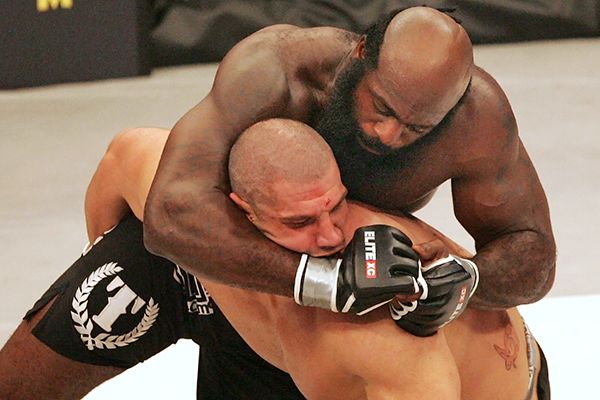
These two refined gentlemen are demonstrating a headlock. There is no way for the man with the bulging veins in his temples and the cauliflower nose to get away from the bemuscled, bearded man holding him captive in a sterroid haze. It is testosterone at its best.

This image that flashed through my mind the other day when I walked in to the dentist's office to get a crown. I have a tooth that cracked around a filling and after putting it off for about four years, it was time. I felt sick with worry and had a lapse in judgment that allowed me to comment to the hygienist about it.
"I have really dreaded this!" I remarked as I sat down on the surprisingly comfortable dentist chair.
"Wow," she said sarcastically. "I've never heard that one before, in eleven years!"

Okay, then. I brought my remarks to a rapid close.

Arranging myself in the chair under the light with the side handles on it, I remembered sitting under one of these in Minnesota. It was when the headlock occurred. Instantly, I found myself having a hard time distinguishing between the events in Minnesota and these taking place in California.
There I had sat, in the chair in Minnesota, my Middle-Eastern dental resident at the U of MN dental clinic, looking grimly down at me.

"Please deaden the tooth well because I'm really sensitive and also really nervous."


"I will give you two shots and that will be enough." Not even a flicker of kindness or sympathy could be seen on her face.

Of course, it wasn't enough. I found this out when she began tapping my tooth with the end of this long metal instrument. It was all I could do not to fly through the ceiling.

"Grmwph!" I moaned.

"Now stop it," she barked. "Just let me get this tooth done. You have nothing to worry about."

"It is very painful, still," I said plaintively.

"Relax!" she said to me in a scolding voice. "If you don't relax, I'll have to take a long needle and shoot the medicine straight down into the head of your tooth. Do you want me to do that?" It was a tone of voice that one might take with a naughty child.

At that point, I didn't care what she had to do to numb the tooth. Just stop tapping on it with that instrument.

"Please give me more deadening medicine before you continue," I choked out.

That's when the headlock happened. As quickly as I could say it, she had me in a headlock and was drilling down into that tooth. The nerve sang out and I pressed my head back into the chair headrest, as if that would help me get away from her. But I couldn't. It was awful. I couldn't scream--I had a mouthful of dental dam and one of those extensor things that held my mouth open. No, I couldn't do anything about any of it except to hang on to the sides of the seat while she drilled into my very sensitive tooth. There was no dental assistant to recruit as an ally. Just me and the heartless dentist.

At the end of the session, I jumped to my feet, went out to the front desk and reported this woman to the receptionist. She looked alarmed and now that I think about it, it could have been either because of my story, or how I looked. I was crying, talking excitedly, and must have had a wild glare in my eyes. I was thoroughly traumatized by this experience.
The dental intern was reported and it was said that she had received dire consequences for her behavior. I hoped so, because I have also experienced dire consequences for her actions, specifically, my irrational tears and panic whenever I sit waiting for my dentist.

My dentist could not have been nicer. He didn't seem to mind that I was crying and trying to look brave. I never felt even one of the many injections he gave me. As my face became numb and my goofy muscle-less grin made me feel like I had only half a head, he smiled and told me stories in a most reassuring way. I drooled out my headlock story and he explained how many ways he could numb up my tooth and whole head if needed. So I sank back into the chair, shut my eyes, and waited for the job to be done. I never felt a thing. What a miracle of modern dentistry and kindness.
I'm going back to have the permanent crown placed this afternoon. There are no headlock jitters. Praise be!

December 27, 2009

Stages of Love--Stage III


The third stage of love has a double-barreled name: Acceptance and Commitment. It comes to members of a couple slowly, one at a time. The realization and acceptance of one's imperfections, propensities, and limitations seems to help couples turn the corner from the Anger and Resentment phase to this stage. It is not an overnight epiphany that leads people to lean a bit closer together, but something might happen that helps a recalcitrant marriage partner to realize that their spouse has excellent qualities that are either hard to come by elsewhere, or that far outweigh the negative features that have been in such sharp focus in previous months or years.

So, he picks his teeth at the table. By now, he knows that you don't like it and will probably comment on it. But he also knows that you're on his side and are not trying to be mean spirited when you tell him that it turns your stomach to see him do that.
She realizes that when her husband launches into a list of instructions and solutions in response to her expression of a feeling, that this is his way to express protectiveness and care for her.

During this phase, couples seem to settle into a more predictable way of relating. Some couples become more companionate within this higher level of commitment. They don't automatically think of revenge or divorce when they are annoyed at their partner. They accept that relationships and people are not perfect, but that by focusing on the good qualities and negotiating more difficult elements of behavior, there is a good and comfortable fit. For some, it is a fantastic fit and the relief of coming to this conclusion is almost visible. Since they are not putting forth so much energy to contend with one another any more, they can relax and enjoy each other for qualities that may have been previously obscured because of their criticisms of one another.

There is another type of commitment and acceptance that is less satisfying but probably more common. Individuals who find it difficult to be emotionally engaged at a deep level with another person will often use bickering and irritability to maintain a degree of emotional distance from their partner so they do not feel threatened or vulnerable. Such individuals are often married to a partner who can't tolerate high degrees of emotional intimacy either, even though they complain about their partner's beligerant or distant behavior. Both spouses have predictable ways of avoiding physical and/or emotional intimacy with one another: abuse, rescuing, affairs, apathy, and polyamory, to name a few common patterns. Other couples' ways of relating may be quite cerebral, foregoing physical affection or tenderness. The begging and pleading of a partner who wants more demonstrates a reciprocal response to the withholding partner. Even this distancer-persuer dynamic, as unsatisfying as it is, can be accepted as the way life will be, and can mark the behavior of couples over the course of their marriage.

Couples come to marriage with explicit and implicit expectations. These are tested and strengthened over the first few years of life together. By the Acceptance and Commitment stage, the emotional marital contract has been worked out or accepted as "as good as it gets."
Explicit expectations may be agreements about who will work, who will raise children if there are any, and who is going to be responsible for what household responsibilities. These may cause disagreement, but are generally open to discussion one way or the other. It is the implicit expectations that contribute to the uproar in the Anger and Resentment stage, and that finally are somehow managed satisfactorily by the time the couple reaches the Acceptance and Commitment stage.

Implicit expectations involve things such as what Paul Rosenblatt of the University of Minnesota calls shadow realities. These are issues that if openly addressed, could undermine the functionality of the relationship. An example is the unspoken expectation that one partner will behave in a dependent and helpless way so as not to show up the other partner. Or that one partner will be a caretaker for the other and will not place any demand for his or her needs to be met by the care receiver. There is considerable positioning and one-upsmanship that occurs as couples go through the process of working out these implicit marital contracts without discussing them overtly. Those couples, in which one partner has succumbed to the pressure of the other spouse to conform to some expectation or behavioral pattern, have arrived at the Acceptance and Commitment stage.

Still others recognize that their marriage might not be a case of immortal lovers, but it is a good-enough marriage that meets the majority of their needs. They will often settle into the predictability of a devitalized marriage without the interest or willingness to improve it. Such marriages can be quite stable for years.
nb: marital stability does not equal marital satisfaction.

So the love relationship continues to move on through time. Research reveals that about every seven years or so, the relationship is renegotiated on some level or in some area, in order to accommodate the growth and experience of each partner. Growing pains would be a good way to describe these little upheavals. For some, personal growth and variation can be like a mudslide, catapaulting the relationship into the sea.But for those whose marriages are satisfying, and who are able to be flexible and accommodating, the marriage sails on to newer levels of understanding and shared intimacy.

December 25, 2009

Christmas Celebration

It has been a good Christmas season. I took Mother and her good friend, Evelyn, to a Christmas concert that was great. They are so cute walking together: holding hands and leaning against one another as they walk down the street. Best friends--that's them.

One of my students from Kenya came over to help me make Christmas goodies. She is a star student and a wonderful person. She made coconut macaroons for our celebration.


These two little livewires hailing from Jamaica and Haiti added quite a bit of zip to the evening. They gave us unending entertainment in the way of impromptu performances of their [sometimes incomprehensible and partially shouted] songs. Here you see them clowning around with my kayak hats which provided no end of amusement for them.


Of course, what would the evening be without involving Sam in the wild goings on? These boys and Sam kept up an almost continual taunting and goofing off. I was relieved to finally have silence after these little characters lurched off out the front door into the cold darkness that night. Sam collapsed into the chair. Mother began laughing and said, "You know how, when you're a young person you can't understand why old people don't like kids?" She paused and threw her head back against the couch. "Well, I never understood that. But tonight I did and I now I realize that I'm old!" and she howled with laughter.

We had laughed, eaten goodies, talked heart-to-heart, played, run, and sung together. I had even had a running obligato accompaniament when I played for us to sing. It was a nice evening when we welcomed Christmas to our home.

December 18, 2009

Stages of Love--Part II

Found here
Resentment is the next stage of marriage. Oh no, it doesn't come out of left field or shock partners when it does hit. There have been little indicators that they have differences and really don't care for some behaviors or comments of the other. But in the Dopamine-induced (pleasure hormone) haze of positive feelings that occurs in the Limerence phase and beyond, these objectionable things have been brushed aside, rationalized, idealized. But at some point, the glassy eyes of love give away to glares of resentment and shock.
You hear references to this in those quiet whispers that a woman makes to her best friend--often tearfully or angrily: "I can't believe that he never learned manners growing up. It drives me nuts." Or, "I've got to figure out how to get him to--(any of these:) lighten up, be more romantic, brush his teeth more often, stop embarassing me with his critical comments in public..." ad infinitum. Friends listen sympathetically, suggest that the couple go to counseling, and the humiliated complainer brings her comments to a rapid close. "We're not that bad!" But he's driving her crazy because suddenly, all she can see are his faults. And there are plenty.
Why on earth did I marry this guy? she will ask herself. What was I thinking? How will I live the rest of my adult life tied to someone with these faults? And she begins grieving the rest of her life that she will live out encumbered by this man whose parents didn't raise him right, who has more character flaws than she knew existed, and whose imperfections are a continual, rankling source of embarassment and frustration.
Maybe if I try to change him I won't be so miserable. Out come all the self-help books and magazine articles. How about a Marriage Encounter weekend (if she can trick him into going)? So women typically, are the ones who are working very hard to try to turn their husbands into someone that they thinks they will be happy with, and there are all sorts of ways to go about this. But the bottom line is that he doesn't change. Interestingly enough, she doesn't change, either. She keeps hammering away at him trying to get him to be more of this and less of that, and in the end, there is either escalating conflict, overt power plays on the side of one or the other, or an emotional standoff. This marriage is just not what I thought it would be.
Meanwhile, he is frustrated with her. Why can't she be sweet like my mother was? Why does she have to gain so much weight? Why doesn't she want sex more often like she used to? Why does she have to get on my back about everything? I just want to enjoy my life: keep the yard looking good, come home after work and watch the game. After all, he tells himself, I don't go out and carouse. Or maybe he has started to, since being at home is irritating--kids crying, upset wife. He begins to withdraw and take less of an interest in her. He tries to remain calm, but he finds himself being put off by some of the things she says and does. It becomes easy to start ordering her around, or saying snide things about her weight, or making fun of how she looks. Of course, this does not engender a more intimate relationship, either.
These are more extreme accounts of what can happen, culled from a clinical population at my job. But I have to say that just about every marriage experiences some of these symptoms. It just depends on how well they are able to communicate, how much they are invested in the relationship, and how much they love one another. It can also depend on their religious commitment to remaining in the marriage. A series of interesting studies done by David Olson at the University of Minnesota, indicate that couples who do not consider divorce an option because of their religious beliefs, have less satisfying relationships overall. This is not surprising. They answer to God, but not to each other. They may be close to God but not necessarily to each other.
The frenetic efforts to change one's partner starts in about year two and hit its zenith around year seven. You've heard of the rule of sevens in marriage (every seven years a marriage is at risk to break down). It's true, and this is the first hurdle.
It is hard work to negotiate the relationship at this point, and to do it in a way that isn't shaming, guilt-producing, or forceful. It is equally hard to look at oneself and realize that while your partner has flaws you didn't know about when you married them and you certainly don't like now, it's even harder to realize that your own flaws make you a real piece of work, too. By year seven, your partner has seen you at your emotional and physical worst: you've been caught redhanded in your worst behavior, you've been very sick and vomited in front of your partner, and shown him some of your unsavory disposition when you're upset.
There are a couple outcomes of the Resentment Phase. One is simply that one partner acquiesces to the other and their poor behavior, thinking that they are impossible to influence or change. John Gottman, a famous researcher on couples, points out that in marriages at this point and in which the man will not speak with his wife about her needs, or who will not listen to her feedback about his behavior, are headed for grave trouble. If they hold together as a couple, the wife will eventually become quite depressed and unmotivated in the marriage. Or they both retreat emotionally and begin to live in parallel worlds, no longer willingly admitting their partner. In other words, the door closes.
Other couples start an approach-avoidance dance meant to keep the other somewhat nearby, but not too close. The goal is to diminish emotional investment but maintain familiarity and the benefits that can be gained in the marriage. These are the couples that you see in restaurants who sit at the table and say nothing but "Pass the salt."
Some partners put their spouse in the doghouse, so to speak, and there is nothing that the spouse can do to get out.
The final outcome is typically divorce or a seriously devitalized marriage.
Yes, they continue to live together and there are times when they struggle doing so.
But we're still together, they say.
Let heaven and nature sing...
The positive outcome of the Resentment Stage occurs when both partners take stock of themselves and begin taking responsibility for the behaviors and traits that are problematic. And happy couples ride out the waves, committed to each other, but not blindly ignoring the challenges that they face. They are able to negotiate how to relate to each other. They remain committed to honesty, while embracing the humanity of each other. Both are committed to the happiness of the other and both recognize their own contributions to the resentment of the other. About half of couples come through the Resentment Phase without getting a divorce. But a much smaller percentage actually move beyond the behaviors and manage to actually enjoy each other. Just look at the married people sitting in restaurants together.
Those who do make it through are very happy to get to the next phase.