Here is something I was emailed that has really touched me. I think you will also be moved by it.
http://www.youtube.com/watch?v=flRvsO8m_KI
November 9, 2007

November 8, 2007
Eternal Rest

It was a memorial service for the mother of an agnostic Jewish woman. I'd never been to a Jewish service and was eager to see what this would be like. Only about 20 people were seated in a Jewish mortuary waiting for everything to begin. An officiant wearing a black silk yarmulke rushed in and hurriedly drew a gold brocade curtain across the room to partition off a pine casket that appeared to be open. A moment later he burst through the curtains into the seated crowd.
"We're about to close the casket. Before we do, does anyone want to view?" His voice was raspy and monotone, yet full of urgency.
"Anyone?" His eyes darted across the crowd. "No one?"
No one moved. I personally, was shocked by his demeanor, which had the same amount of emotion one would have if asking for directions to the DMV.
"All right," he continued. "We will proceed momentarily." And he disappeared back behind the curtain.
Meanwhile, those sitting around me chatted away about various community news items. There was no meditative music, no hushed whispering or reverence. The family members stepped back through the curtain and seated themselves on the front row facing the officiant.
"Okay," he stated. "Let's begin then. I never had the pleasure of knowing Idilah Steinmetz in life and it is unfortunate to make the family's acquaintance at this difficult time. So I can't speak about her from personal experience. Who better can talk about her life than her family? We will hear from them in a couple minutes." He intoned flatly, "Let us proceed by reading together the selection in the middle section of the program" (which I was not given when I came in).
We flew through Psalm 23, the Shepherd's Psalm. Never have I recited that Psalm so quickly. Two family members stood and spoke at length about their mother and grandmother who had died the day before. One remembered the deceased fondly. The daughter gave a rambling monologue about how one family member with psychic powers, had chosen to cut off from the family and was not there. "But I'm sure he's lurking around the cemetery somewhere. He's probably looking in the windows now." We all instinctively glanced at the windows. She continued by telling us that when her father had died a year earlier, someone told her that her mother would die soon thereafter because their relationship had been so enduring. "Ironically enough," she continued, "Two months after he died Mother started insisting that he was gay! And that he has been gay for years. She hated him and she reminded us of that every visit."
"--She did not!" a woman in the middle of the group said aloud. "She never said that. Don't say that about her! She wouldn't say that."
The daughter forged ahead. "We had a very complicated relationship, and there's a lot I could say, but today I'll only say good things."
Her remarks sort of trailed off. She ended her comments by shrugging her shoulders and sitting down next to her husband. He stepped up to the front of the assembly and read to us something that his father-in-law had read to him at his wedding. It was an obscure passage from an Eastern guru's writing from the middle 16th century. I couldn't follow it because it seemed somewhat circuitous or something.
The son-in-law sat down and the officiant stepped back out from the curtains at the side. He announced that there would be a private burial service later in the day, but that we were all invited to eat over at the Odyssey restaurant. "Take Rinuchio down two blocks. Turn left at the stoplight. You will turn on to SeaBreeze and go for two blocks. Take the next right and half-way down the street, you will see the restaurant." It was all said without any feeling or enthusiasm.
"And now we will tie on the k'riah ribbon." He uttered a monotone description of the symbolism of these ribbons, pinned them on the family members, then shredded them in his hands. "Wear these for 30 days. But on the 30th day do not wear it for more than one hour because our fathers told us not to mourne for longer than 30 days." Without taking more than a catch breath, he continued, "Now we will read together the Kadish found on the last page of the program."
I didn't have the program and couldn't join in the Hebrew reading, although as I listened, I wished I had the opportunity to see if I could keep up with everyone else. I didn't have long to wait til it was over. The officiant tore through the reading, doubletime.
"Now we're finished. May the name of Idilah Steinmetz be a blessing in your mouth every time you say it." The family nodded. "We now commend you to eternal rest. You will live on forever in our hearts." And he turned and walked out.
Everyone just got up and walked out.
I don't know how much of that funeral was typical for Jewish services and how much was due to the unique family situation. But it left me very disturbed, on many accounts. I've described some of the quirkiness. However, what troubled me the most was the lack of anything about the life hereafter. There lay a dead woman in a casket and no one had the belief that they would ever see her again, or that she would ever be alive again. According to the prevailing ideas, Idilah was dead and that was the end of her life--ever. Eternally.
Most of Christendom believes that at death a person's spirit leaves the body and goes up to God. For many, that means that the essence of the individual lives on, though their body remains in the ground. Because of Augustine's ideas of the separation of matter and spirit, it is assumed that a person can exist aside from her physical body. So that the loved one is up above in heaven, watching and sometimes helping those on earth. My beliefs are different than that. I believe in soul sleep and a body-soul connection. If one dies, the other does, too. At the resurrection, the body and soul become immortal and live forever in heaven, in the presence of God.
But whatever the details of the "hereafter belief," Christians have something to look forward to. We know that death is not forever for many people. God, in His mercy, has prepared much greater things for us than we can even dream of. The attendees of the memorial service seemed to take everything in stride. Death, funeral, family. That is how it is. They all went out together and had a meal, sharing their humanity by grieving and sharing stories of the deceased together. I drove home thanking God for the immeasurable Gift we have been given: Eternal life, not eternal rest.
November 4, 2007
Camp Good Grief

This weekend I served as a volunteer resource therapist at Camp Good Grief up in the Angeles Oaks mountain area. This is a weekend experience for kids ages 9 - 14 who have lost a family member due to illness. There were many very sad children, recounting their stories of watching family members die, or paramedics try to revive their fallen loved ones. It was a heartwarming experience, as it always is. We had about 30 kids and at least 30 staff, giving the kids one-to-one experiences with many of us. The weather could not have been more perfect, and thankfully, the incoming Santa Ana winds didn't start any fires or create problems for us.
There were a number of my students there, so I merely circulated around the various group meeting sites to be sure everything was going smoothly. Camp Cedar Falls is up about 8,000 feet high or so. All the adults got winded just walking up to the lodge after eating in the cafeteria. It was almost enough to make me want to skip meals! Kids were roiling around, up and down the hills, halls, trees--you name it. No fatigue there, unfortunately.
One very precious moment is still clear in my mind. I went to the young boys' group to help lead an activity. We had little white plastic flowerpots that snapped down into a larger clear pot. The inner and outer surfaces could be decorated with colored tissue paper and decoupaged on. It's a real dorky activity for teenage boys, but the 9 - 10 year-olds were immediately interested. There was tissue paper being pulled in all directions as they looked for just the right color and pattern to put on their pots. We told the boys that they could take a Sharpie pen and on the outside of the inner pot, write a message in honor of their loved one who had died. They fell to, busily writing in newly learned cursive writing: "In loving memory of ________" and "I love you, ________."
One chubby little guy with glasses was busy working on his flower pot. I could tell, just by looking at him, that he was taking this endeavor very, very seriously. He carefully wrote in bright blue, "In loving memory of Yadira" (not her real name) with big loopy, cursive letters. Then he sat quietly looking at the pot, his hands almost caressing it. A moment later, he sat studying the various tissue papers. Sorting through the stack of zebra print, butterflies, hearts, and miscellaneous patterns, he finally settled on a large floral print. The other boys were by this time talking together and trying to best one another in how they cut out their pieces of tissue. This little boy didn't talk to the others, but very slowly and methodically cut out several large pink lillies and put them on the outside of his pot. I couldn't help myself.
"Wow. Your pot has some beautiful colors on it."
He smiled without looking at me.
I watched several minutes and asked him, "Who are you making your pot for?"
"My sister," he said very softly.
"Oh. When did she die?" I asked.
"A couple years ago."
There was no need to say the polite, "I'm sorry." All our groups had been through that already, and everyone up there had lost someone recently.
"How old was she?"
"Nine. I was only seven." He said it so matter of factly, but in a soft little voice.
"Oh."
"Did Yadira like flowers?" I asked.
He nodded. "Pink ones."
He wanted to get more color on the inside and outside of his pot and didn't know how to put the decoupage glue over it. The activity took only about 15 minutes, but the whole time I sat with him, we hardly spoke. I'd just point to something and say, "How about that?" and he's nod and keep on working. It was a grave expression on his face, and I could see that his little heart was very hurt.
He worked at it some more and when the group leader called the boys back to their seats, he held his decorated pot up for me to see. He had left a little window where the words, "In loving memory of Yadira" could be seen on the inner pot. Big pink lillies were backlighted with bright blue paper underneath. One purple butterfly flitted across one side of the pot.
He looked at me questioningly.
"That is beautiful!"
He smiled faintly but continued to look at it as though he wasn't sure.
He turned it in his hand one way and then the other, checking to see that his message to his sister was visible. He looked around at the other boys' pots and then back to his own. He seemed uncertain.
"Honey, if Yadira liked flowers, she would love this pot. It's very, very pretty and just right for a girl."
"Honey, if Yadira liked flowers, she would love this pot. It's very, very pretty and just right for a girl."
The rigidness of his stance relaxed a bit and he nodded, putting it down on the vinyl papercloth to finish drying.
"Thank you," he said. And he walked over to join the other boys who were waiting to start a moment of silence. He sat down in his seat and shut his eyes. Then they flew open and he looked back at his pot, as it to reassure himself that it was still there. His eyes searched my face then and I smiled and nodded at him as if to say, "It's lovely and you did well."
He smiled a huge smile at me and put his head down for silent reflection.
Events like this don't come every day. What a tragedy that all of these children had been left without sibling, mother, or father. Their teary eyes and tense bodies said volumes about what they had gone through. They didn't choose to have these things happen to them. They were just trying to manage the best they could.
When they left today, their steps were a bit lighter and they looked more peaceful than when they came two days ago.
As I was packing up the van with boxes of supplies, my little friend, who was walking past, paused to catch my eye. Although he stood only three feet away, he waved at me, holding his flowerpot carefully in one arm.
"Bye," he said softly with a sweet smile on his face.
"Bye. See you next year."
And God bless you, precious one.
October 31, 2007
With Fear and Trepidation
It is November 1, 2007. It is an important day and even more important that I talk about why.
For months I have not been feeling well. I am overweight and have all the health and wellness issues that come from being sedentary, overweight, and stressed: gastric reflux, fatigue, obesity. And very few clothes feel good on me. It's time to get healthy and lose weight. 50 lbs, to be exact.
I have had plan after plan of how to drop this weight. Nothing has "stuck" and I am heavier than ever. Last month I spent a night in the ER because of chest pain. My health has become a matter of life and death. I MUST straighten up and get serious about staying alive and in good shape. Because if I've learned nothing else over the last few years, it's that at my age, I'm not going to have improved health and physical shape by accident.
Here is my plan: I will be eating no more than 1500 calories daily for the first 30 lbs of weight loss. I am not allowed bread or potatoes for the first six weeks. No sugar of any kind is allowed. Should I get tired of counting calories, I can eat all I want for one day--provided that no bread, fat, or sugar is involved, and that these "free days" occur no more often than one day per week.
In addition, I will be walking four days per week, for a minimum of 20 minutes each time.
I can do this. I've done it before. Now that it's written down and I'm acknowledging this, I must be accountable. Food has always been a comfort and coping device for me. Now it's time to change lifelong habits and grow into the person I was meant to be. I'll try not to discuss my eating and weight here because it can be really tedious and feel a bit intrusive having to read my inner process regarding food. But it will be an enormous struggle.
Please remember me in your prayers.
For months I have not been feeling well. I am overweight and have all the health and wellness issues that come from being sedentary, overweight, and stressed: gastric reflux, fatigue, obesity. And very few clothes feel good on me. It's time to get healthy and lose weight. 50 lbs, to be exact.
I have had plan after plan of how to drop this weight. Nothing has "stuck" and I am heavier than ever. Last month I spent a night in the ER because of chest pain. My health has become a matter of life and death. I MUST straighten up and get serious about staying alive and in good shape. Because if I've learned nothing else over the last few years, it's that at my age, I'm not going to have improved health and physical shape by accident.
Here is my plan: I will be eating no more than 1500 calories daily for the first 30 lbs of weight loss. I am not allowed bread or potatoes for the first six weeks. No sugar of any kind is allowed. Should I get tired of counting calories, I can eat all I want for one day--provided that no bread, fat, or sugar is involved, and that these "free days" occur no more often than one day per week.
In addition, I will be walking four days per week, for a minimum of 20 minutes each time.
I can do this. I've done it before. Now that it's written down and I'm acknowledging this, I must be accountable. Food has always been a comfort and coping device for me. Now it's time to change lifelong habits and grow into the person I was meant to be. I'll try not to discuss my eating and weight here because it can be really tedious and feel a bit intrusive having to read my inner process regarding food. But it will be an enormous struggle.
Please remember me in your prayers.
Newlywed Flu
Hot, prickly skin
Hair matted to his scalp;
Sweaty back, florid face.
Heave-ho, “Jason, hasten…”
All over the rug.
“What did you cook for him?”
“Is he allergic to peanuts?”
Anxiety crescendos from my parents;
Their voices strained with concern
Over my week-old marriage,
“I told him I love him.”
Pleased at my fawning over him,
As they leave to celebrate the
morning 52 years before
when their marriage was birthed.
“It happened to him, too”
and mother winks at daddy.
Written in April, 2003 after giving Sam rice cakes and peanut butter.
He will never eat rice cakes again, I am sure!
Hair matted to his scalp;
Sweaty back, florid face.
Heave-ho, “Jason, hasten…”
All over the rug.
“What did you cook for him?”
“Is he allergic to peanuts?”
Anxiety crescendos from my parents;
Their voices strained with concern
Over my week-old marriage,
“I told him I love him.”
Pleased at my fawning over him,
As they leave to celebrate the
morning 52 years before
when their marriage was birthed.
“It happened to him, too”
and mother winks at daddy.
Written in April, 2003 after giving Sam rice cakes and peanut butter.
He will never eat rice cakes again, I am sure!
October 30, 2007
Catupuncture
I called to get an appointment for Otis' health checkup. It's been over a year since he's seen a vet and he needs his next round of vaccinations. So I called the vet who used to treat Zita when she was alive.
Dr. Madge's assistant answered the phone.
No, Dr. Madge's practice has undergone significant change, she told me in a hushed, breathy voice that bordered on the mysterious. We perform wholistic health for pets: accupuncture and chiropractic, and use of herb dietary supplements for total health.
I was appalled.
Perhaps it's because I grew up in the country surrounded by the neighbor's farm animals. Animals were what they had because it was a practical thing: they made money for the farmers. The barnyard cats were there because they kept down the rodent population, which saved money on grain and machine parts that typically got nibbled down to nothing in the cold winters. The dogs were to ride on tractors with the farmer, run to get the paper, keep the sheep in line, and help rounding up the cows at milking time. Every animal had a purpose.
It was not unusual for farmers to shoot the calves born with congenital defects, or to do other things with unwanted litters of kittens. But mostly the farmers I knew were kind souls who would never willfully hurt an animal for no cause.
But herbs and chiropractic for Otis? He can barely tolerate me massaging him unless he's almost dead from being sleepy. I can't visualize him stretched out on a padded couch, accupuncture needles sticking out of his neck, a vet stretching his legs and working his abs whilst inhaling in lavender or vetiver--things that makes him turn his head and retch every time I offer him a sniff. He would come home and roll around on the floor to try and get the smell off himself, ears flat to his head, shaking his head in disgust.
It was a very funny image. I'm sure there are those whose pets benefit from these treatments, and I quite understand the need for alternative medicines than the same old thing therapy. But juxtaposed against the backdrop of 25,000 acres of burned down homes, businesses, churches, and wilderness areas, questions arise about use of resources and priorities. Dr. Madge is only a vet and can't be responsible for FEMA procedures or helping people get on their feet again. And I don't begrudge her the opportunity to practice vetinerary medicine the way she chooses--and with obvious benefit. But it seems that our society has been turned on its ear. People in dire straits, who have lost all they have in wildfires, can walk past Dr Madge's office, look in, and see cats and dogs getting treatments they themselves could benefit from but can't afford. Or that seem superfluous in the face of their losses.
Otis is going to Dr. Taverstock, who will see him, give him his shots, pat him on the head, and send us home. And that's more medical attention than many children in this country get.
It's an interesting time in Southern California and in our world.
Dr. Madge's assistant answered the phone.
No, Dr. Madge's practice has undergone significant change, she told me in a hushed, breathy voice that bordered on the mysterious. We perform wholistic health for pets: accupuncture and chiropractic, and use of herb dietary supplements for total health.
I was appalled.
Perhaps it's because I grew up in the country surrounded by the neighbor's farm animals. Animals were what they had because it was a practical thing: they made money for the farmers. The barnyard cats were there because they kept down the rodent population, which saved money on grain and machine parts that typically got nibbled down to nothing in the cold winters. The dogs were to ride on tractors with the farmer, run to get the paper, keep the sheep in line, and help rounding up the cows at milking time. Every animal had a purpose.
It was not unusual for farmers to shoot the calves born with congenital defects, or to do other things with unwanted litters of kittens. But mostly the farmers I knew were kind souls who would never willfully hurt an animal for no cause.
But herbs and chiropractic for Otis? He can barely tolerate me massaging him unless he's almost dead from being sleepy. I can't visualize him stretched out on a padded couch, accupuncture needles sticking out of his neck, a vet stretching his legs and working his abs whilst inhaling in lavender or vetiver--things that makes him turn his head and retch every time I offer him a sniff. He would come home and roll around on the floor to try and get the smell off himself, ears flat to his head, shaking his head in disgust.
It was a very funny image. I'm sure there are those whose pets benefit from these treatments, and I quite understand the need for alternative medicines than the same old thing therapy. But juxtaposed against the backdrop of 25,000 acres of burned down homes, businesses, churches, and wilderness areas, questions arise about use of resources and priorities. Dr. Madge is only a vet and can't be responsible for FEMA procedures or helping people get on their feet again. And I don't begrudge her the opportunity to practice vetinerary medicine the way she chooses--and with obvious benefit. But it seems that our society has been turned on its ear. People in dire straits, who have lost all they have in wildfires, can walk past Dr Madge's office, look in, and see cats and dogs getting treatments they themselves could benefit from but can't afford. Or that seem superfluous in the face of their losses.
Otis is going to Dr. Taverstock, who will see him, give him his shots, pat him on the head, and send us home. And that's more medical attention than many children in this country get.
It's an interesting time in Southern California and in our world.
October 21, 2007
Dirty Laundry

The email message was cryptic: "Dawn's mother died this afternoon. She will be out of the office next week." I picked up the phone and called her to see what I could do to help her. Dawn's mother lived with her. So do her daughter and two grandchildren. She is the pillar of the household and of late, a very tired one.
Her voice sounded like she'd been crying. I almost didn't call her because I was afraid she wouldn't really want me to call her, or would wish to be left alone or something. But no, she was glad I called. Would she allow me to bring her supper? She was thrilled. So a couple hours later, I pulled up into the driveway armed with beef ravioli, salad and fresh homemade chocolate chip cookies. She probably wouldn't be able to eat much, but the kids would be happy for something good.
Dawn and her daughter, Suzie, were sitting in a darkened livingroom. Kids were running in and out of the house playing (mostly) in the back yard. When I reached to hug her, Dawn clung to me. A few moments later she shared with me that both of her siblings had already preceded her in death. Her father has Alzheimer's and lives in a board and care facility. She is my age.
She invited me to sit for a few minutes and she told me the whole death story. Her mother, who had severe emphysema, diabetes, and an amputated limb, had with great difficulty gone into the livingroom to sit for a few moments before she got her breakfast. That is where the caretaker found her at 2:00 in the afternoon when she let herself in the house. Mom looked like she was having a very peaceful nap.
As we sat in the front den I noticed mountains of what looked like dirty clothes in the chairs. Bags of clothes were all over. "Dawn, let me take all your laundry home and get it taken care of for you." It was a struggle, but numerous negotiations later, I triumphantly drove off with dirty laundry in the trunk and back seat, obscuring the rear view mirror in my car.
Her mother's bedding smelled like urine. But her sheets were brilliant blues and fuschia colors--crisp and light. Her damask bedspreads were pretty navy blue and sky blue. She had enjoyed good taste. The kids' socks were filthy--just as all socks get when you run around on a tile floor without wearing shoes. Their darling little outfits filled six paper grocery bags.
It wasn't until I had begun to fold the million or so washcloths that I realized that one must really trust another to hand over their dirty laundry to them. You can tell a lot about a person or family by washing their clothes. All these washcloths must have been used by Dawn's mother for a variety of reasons. She had been a very sick woman with many special care requirements. Washing her clothes, bedding and washcloths made me feel like I was able to do something for her. She would have been grateful.
It's humbling to handle garments that need mending, or have raggedy edges, or stains. Because I have clothes, old towels, mismatched sheets, filthy socks, just like Dawn's family has. One could find all sorts of regular dirty laundry in my cupboards and hampers. It seems to be the great leveler: soiled clothes. Everyone has some.
Cleaning our clothes can be a dreaded chore or it can be a reason to pause and reflect on the people who wore them last. I suppose that mothers around the world have been doing this for centuries. But on this day, as I folded up the umpteenth load of laundry, I was the one thinking about how much I really do care about Dawn and her family. She is all alone--without sibling or parent who can help--trying to arrange the service, get the obituary written, plan a reception at her home following the burial. It reminded me of what happened in my life one year ago this week when my own father died. The helpful hands and hearts of others made it possible to endure the aloneness that I had to face. It may have been only running an errand or picking up something from the cleaners or taking over a small detail. But it was one thing less that I had to concern myself with.
As I washed and folded clothes today I was again grateful for the love of those who make our grief and aloneness endurable. And I was blessed in passing that along to someone else.
October 18, 2007
Raising Cain
 The first time in scripture that animal sacrifice is mentioned is in Genesis 4. A casual reading of this chapter leads one to believe that Cain and Abel knew what God required for sacrifices. Abel presented a firstborn lamb and the best parts of it as a sacrifice. Cain presented God with fruit and vegetables from his harvest.
And God had no regard for Cain's sacrifice.
But God did not accept Cain's fruit.
But upon Cain and his offering, He did not look.
I wonder how God acknowledged Abel's offering. There is speculation by a number of Bible scholars that God sent fire down from heaven to consume the lamb, indicating favor or acceptance of the offering.
A blood offering was required in the ancient sacrificial system because it pointed ahead to Christ's sacrifice. Fruit points toward nothing. Except that it was fruit that was involved in the fall of Adam and Eve. Blood is not aesthetic and killing a lamb would be disheartening, to say the least. But apparently, God told the first family what was expected for sacrifices and Cain thought it would be less offensive to offer fruit and vegetables instead of a dead animal.
Interesting, too, that because God accepted Abel and not Cain, Abel paid for doing right with his life. We do not have any record that Abel chided Cain or that he acted superior because of being right. Maybe he tried to point out to Cain that God expects obedience, and that it is a simple thing to do what has been requested. Unfortunately, the right thing is not always popular.
I was thinking about the importance of obedience when I recently read Genesis 4. For those who think that obedience means legalism, they should look over this chapter. God is serious about the imperatives He issues. There aren't a whole lot of them, but the laws and requirements outlined in the Bible are not optional.
Love your neighbor as yourself.
Seek the Lord with all your heart, mind, and soul.
Be sure to entertain strangers.
Do not lie or behave in deceitful ways.
Don't covet what other people have.
Put your money where your heart is
Remember to keep the Sabbath holy.
Now speaking of our own ideas of what is right--there's a commandment that has been changed to reflect what people think would be better than what God established and lived by while on earth.
I think all of us have some way of turning a blind eye to a command of God and substituting something that is easier, more accepted, more fun, or that seems to pay off more than the old, boring requirements. Exaggerate the truth to make a story more interesting. Allow your mind to wander into forbidden areas: What would it be like to make love to someone other than who I am married to? Say something hasty and unsavory to your parent because their behavior is grating. Deny the name of Christ by your behavior.
We all do it in some way--do whatever we think works better than what God clearly states. Then we are resentful of those who don't do as we do.
All the while, God is at our elbow asking, Is your way going to get you what you want and what is best for you?
The Bible says that although Abel is dead, his blood still speaks from the ground. His example of absolute obedience, whether or not he understood the sacrificial issue or not, is for us today.
Obedience is vital. Would you obey even if it would cost your life?
Food for thought.
October 15, 2007
Who has the privilege?
Do you ever think about being, looking, or identifying as someone other than the race, age, sexual orientation, or member of your socioeconomic status? See how many of these questions you can answer in the affirmative:
I can go shopping alone most of the time, pretty sure that I won’t be followed or harassed.
I can turn on the TV or open to the front page of the paper and see people like me widely represented.
I can be sure that my children will be given curricular materials that testify to the existence of their race, religion, sexual orientation
I can swear, or dress in second-hand clothes or not answer letters without having people attribute these choices to the bad morals, poverty, or the illiteracy of my race
I can remain oblivious of the language and customs of persons of color who constitute the world’s majority without feeling in my culture any penalty for such oblivion.
I can criticize our government and talk about how much I fear its policies and behavior without being seen as a cultural outsider.
I can be pretty sure that if I ask to talk to the “person in charge,” I will be facing a person of my race.
I can easily buy posters, postcards, picture books, greeting cards, dolls, toys, and children’s magazines featuring people like me.
I can go home from most meetings of organizations I belong to feeling somewhat connected, rather than isolated, out-of-place, out-numbered, unheard, held at a distance, or feared.
I can be sure that if I need legal or medical help, my sexual orientation will not be a matter of comment
I can choose blemish cover or bandages in “flesh” color and have them more or less match my skin
(Peggy McIntosh in M. McGoldrick’s book, ReVisioning Family Therapy.)
This weekend I shared this list with an audience of about 80 people at one of my workshops. There were a number of people for whom all these answers were "yes." There were five or six people whose Yes answers were less than three. All of them were born in the U.S. and were highly educated, working as therapists in large urban areas. One man shared, "I could only answer yes to two of these questions. I realized that as I was going through the list, that I purposely try not to think about these things or else I couldn't function." This, from the director of a marriage and family therapy-pastoral counseling program.
He went on to share that he finished his PhD in marriage and family therapy and then decided that he would like to be sure that he was qualified for any job opportunity that may present itself to him. So he went to a famous family therapy institute for a postdoctoral fellowship and spent one year studying with renowned family therapists. Just as the year was ending, he was sent a job announcement for the director of an inpatient family therapy program for kids with behavioral problems. It was perfect for him so he applied and waited to be called for an interview. He knew the other applicants and of all of them, he was most educated, experienced, and then there was his postdoc. Weeks went by. When he finally called to find out the status of his application he was told that he wasn't qualified enough. They had hired someone who had experience in another field but who had read a book about family therapy. That man would be heading up the family therapy program.
As I listened to this man share his experience with the group, heads nodded in agreement across the room. One woman explained that she is aware every single day of her brothers and sisters across the nation who cannot respond positively to any question that I had read. These are all American citizens.
I have the privilege. I am a White woman--one of the most protected segment of the population. It was out of fear for "our women" that Whites lynched Blacks in the South, alleging that Black men had threatened either the reputation or purity of White women. It is little wonder that there is such resentment at times from people of color. To be assaulted with fire hoses if you sit in a "White" coffee shop, expected to stand in the back of the bus rather than in the front, to be told by supervisees who are still wet behind the ears, "I refuse to have you supervise me," or that you don't know what you're talking about (and the assumption is that they do), would call forth more than exasperation.
To pretend that I don't have privilege is arrogant on my part. I can walk into any shop, school, church, and be expect some sort of deference. Whether or not I should have it is quite another story. But in this society, I can expect it. Awareness of these things should humble me. I did nothing to be born White and have the characteristics, parentage, that I have. I had nothing to do with slavery. My great-grandfather fought against it in the Civil War. We lived in Hattiesburg, Mississippi during the Civil Rights Movement. It was horrid--even for me at the age of four. My sister drank out of a "Colored" water fountain at Sears and the White clerk rushed over to my father. "Don't let her drink out of that! Use the White fountain." My Northern father reflected a moment, studying the water pipes that supplied both the Colored fountain and the White fountain. "Look here," he said. "The water for both comes from the same pipe. They are absolutely the same." The clerk became enraged, insisting that my sister only drink from the White fountain. My father told him essentially that he was nuts. And we were told to leave the store. "We don't need your kind around here."
Or the time my mother went to the bank one morning. A very pregnant Black woman stood at the front of the line, waiting for the doors to open. When they did open, she went over to a bench and sat down with her children. They had to wait until all the Whites had been served before she could approach the teller. Mother invited her to go ahead of her and she politely declined. The teller became angry with Mother for disupting the law of keeping "niggers in their place." Even writing this makes me cringe.
As an adult, I had naively assumed that the Civil Rights Movement made things pretty good for people of color. And yet, that is simply not as true as one would think. It is little wonder that there were tears, downcast expressions, and halting expressions of experience at my workshop. The term, "cultural sensitivity" doesn't always fall the same way on everyone's ears. People of color can't escape dealing with cultural issues in almost every venue they approach. Being White means that I don't have to.
I didn't bring the slaves here from Africa and the Islands. I didn't abuse them, kill them, discriminate against them. But many in this country did and now we are faced with the difficulty of feeling a collective sense of guilt, shame, and wishing it would all go away. I can't pay for what others have done. I shouldn't be punished for what they did and the dynamics that exist. But neither should people of color have to deal with the impact and legacy of coming from slaves and being despised then and now. We have formulated all sorts of simplistic responses about how people of color should conduct themselves, think about life in the United States, or interact with Whites. But few of us really understand what it is like to be non-White and (often) non-privileged.
We are each accountable for what we do with our lives, regardless of our origins or the difficulty we have encountered along the way. I just think that we ignorantly assume that because Abraham Lincoln stated that "all men are created equal" that this is true. It isn't. We all have the same value in the eyes of God, but we are not all equal, do not all start out from the same place, or have the same innate capabilities and emotional/social tools as others have. We all do the best we can. Awareness and understanding of others who are not as privileged as we are is critical if we are to sensitively interact with others who by no choice of their own, are born to races that are not honored in this country and that have painful legacies.
Have you ever thought about the privilege that you hold?
I can go shopping alone most of the time, pretty sure that I won’t be followed or harassed.
I can turn on the TV or open to the front page of the paper and see people like me widely represented.
I can be sure that my children will be given curricular materials that testify to the existence of their race, religion, sexual orientation
I can swear, or dress in second-hand clothes or not answer letters without having people attribute these choices to the bad morals, poverty, or the illiteracy of my race
I can remain oblivious of the language and customs of persons of color who constitute the world’s majority without feeling in my culture any penalty for such oblivion.
I can criticize our government and talk about how much I fear its policies and behavior without being seen as a cultural outsider.
I can be pretty sure that if I ask to talk to the “person in charge,” I will be facing a person of my race.
I can easily buy posters, postcards, picture books, greeting cards, dolls, toys, and children’s magazines featuring people like me.
I can go home from most meetings of organizations I belong to feeling somewhat connected, rather than isolated, out-of-place, out-numbered, unheard, held at a distance, or feared.
I can be sure that if I need legal or medical help, my sexual orientation will not be a matter of comment
I can choose blemish cover or bandages in “flesh” color and have them more or less match my skin
(Peggy McIntosh in M. McGoldrick’s book, ReVisioning Family Therapy.)
This weekend I shared this list with an audience of about 80 people at one of my workshops. There were a number of people for whom all these answers were "yes." There were five or six people whose Yes answers were less than three. All of them were born in the U.S. and were highly educated, working as therapists in large urban areas. One man shared, "I could only answer yes to two of these questions. I realized that as I was going through the list, that I purposely try not to think about these things or else I couldn't function." This, from the director of a marriage and family therapy-pastoral counseling program.
He went on to share that he finished his PhD in marriage and family therapy and then decided that he would like to be sure that he was qualified for any job opportunity that may present itself to him. So he went to a famous family therapy institute for a postdoctoral fellowship and spent one year studying with renowned family therapists. Just as the year was ending, he was sent a job announcement for the director of an inpatient family therapy program for kids with behavioral problems. It was perfect for him so he applied and waited to be called for an interview. He knew the other applicants and of all of them, he was most educated, experienced, and then there was his postdoc. Weeks went by. When he finally called to find out the status of his application he was told that he wasn't qualified enough. They had hired someone who had experience in another field but who had read a book about family therapy. That man would be heading up the family therapy program.
As I listened to this man share his experience with the group, heads nodded in agreement across the room. One woman explained that she is aware every single day of her brothers and sisters across the nation who cannot respond positively to any question that I had read. These are all American citizens.
I have the privilege. I am a White woman--one of the most protected segment of the population. It was out of fear for "our women" that Whites lynched Blacks in the South, alleging that Black men had threatened either the reputation or purity of White women. It is little wonder that there is such resentment at times from people of color. To be assaulted with fire hoses if you sit in a "White" coffee shop, expected to stand in the back of the bus rather than in the front, to be told by supervisees who are still wet behind the ears, "I refuse to have you supervise me," or that you don't know what you're talking about (and the assumption is that they do), would call forth more than exasperation.
To pretend that I don't have privilege is arrogant on my part. I can walk into any shop, school, church, and be expect some sort of deference. Whether or not I should have it is quite another story. But in this society, I can expect it. Awareness of these things should humble me. I did nothing to be born White and have the characteristics, parentage, that I have. I had nothing to do with slavery. My great-grandfather fought against it in the Civil War. We lived in Hattiesburg, Mississippi during the Civil Rights Movement. It was horrid--even for me at the age of four. My sister drank out of a "Colored" water fountain at Sears and the White clerk rushed over to my father. "Don't let her drink out of that! Use the White fountain." My Northern father reflected a moment, studying the water pipes that supplied both the Colored fountain and the White fountain. "Look here," he said. "The water for both comes from the same pipe. They are absolutely the same." The clerk became enraged, insisting that my sister only drink from the White fountain. My father told him essentially that he was nuts. And we were told to leave the store. "We don't need your kind around here."
Or the time my mother went to the bank one morning. A very pregnant Black woman stood at the front of the line, waiting for the doors to open. When they did open, she went over to a bench and sat down with her children. They had to wait until all the Whites had been served before she could approach the teller. Mother invited her to go ahead of her and she politely declined. The teller became angry with Mother for disupting the law of keeping "niggers in their place." Even writing this makes me cringe.
As an adult, I had naively assumed that the Civil Rights Movement made things pretty good for people of color. And yet, that is simply not as true as one would think. It is little wonder that there were tears, downcast expressions, and halting expressions of experience at my workshop. The term, "cultural sensitivity" doesn't always fall the same way on everyone's ears. People of color can't escape dealing with cultural issues in almost every venue they approach. Being White means that I don't have to.
I didn't bring the slaves here from Africa and the Islands. I didn't abuse them, kill them, discriminate against them. But many in this country did and now we are faced with the difficulty of feeling a collective sense of guilt, shame, and wishing it would all go away. I can't pay for what others have done. I shouldn't be punished for what they did and the dynamics that exist. But neither should people of color have to deal with the impact and legacy of coming from slaves and being despised then and now. We have formulated all sorts of simplistic responses about how people of color should conduct themselves, think about life in the United States, or interact with Whites. But few of us really understand what it is like to be non-White and (often) non-privileged.
We are each accountable for what we do with our lives, regardless of our origins or the difficulty we have encountered along the way. I just think that we ignorantly assume that because Abraham Lincoln stated that "all men are created equal" that this is true. It isn't. We all have the same value in the eyes of God, but we are not all equal, do not all start out from the same place, or have the same innate capabilities and emotional/social tools as others have. We all do the best we can. Awareness and understanding of others who are not as privileged as we are is critical if we are to sensitively interact with others who by no choice of their own, are born to races that are not honored in this country and that have painful legacies.
Have you ever thought about the privilege that you hold?
October 9, 2007
Giants

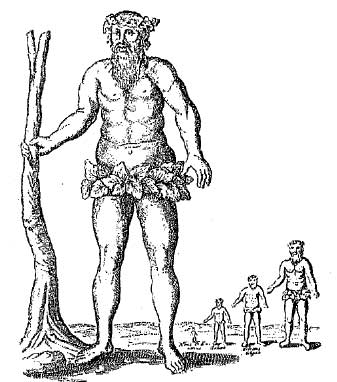
Tomorrow night I travel to a national conference in Long Beach, California. It will be a very intense weekend of meetings and presentations. I am giving several presentations, one of which I am prepared to do. The other will be prepared at night after the next couple day's meetings, and one will be the result of me flying by the seat of my pants. So much for professionalism! Good job that two of these presentations are with colleagues from my university.
I had no idea what was involved when I accepted the invitation to coordinate 15 hours of workshops over the weekend. It will help me advance to full professor to have this on my resume. Being able to say that I presented three workshops at a national conference is also a feather on my cap. Small comfort that, as I stare at the computer screen for hours on end, borrowing time from other projects that are languishing as we speak.
These conferences are attended by all the Who's Who in my field. Quite frankly, it is a rather intimidating assemblage. Any number of well-known authors, theorists, and clinicians may find their way to my workshops which would cause no end of consternation on my part. (Can you tell I'm on my last nerve???)
It's interesting, this sense of intimidation.
Connie, a very well-published colleague, invited me to present along with her. Our talk is about power and privilege in the supervisory relationship--how we as supervisors can intimidate and undermine the students and interns with whom we work. More specifically, it's how not to do that. One day last week as we were putting together our presentation, we offhandedly tried an experiment that we are hoping to have our attendees do: we had a discussion about our differences and similarities for several minutes.
Connie started out: "I grew up in [the Midwest] on a farm and for some reason, I think you're very much like me. I didn't have a lot of friends growing up and I learned to occupy myself as a farm child. Something about you seems familiar to me in this way." She went on to discuss that we have similar builds and other features of our demeanor in common. Then it was my turn.
"I'm aware that you are more experienced, more published than I am, and have held a number of very prestigious positions in our field." It was the first thing I noticed. She smiled and acknowledged my comment. I added a few other similarities and contrasts and we were done. Connie was her typical warm, pleasant self, but I left that meeting exhausted and wondering why I was so spent.
Later in the evening, Connie emailed me:
I had a thought about our little exercise with each other that shows an interesting power issue. I focused on our similarity. You raised that I had been in the field a lot longer (and perhaps also then more senior/respected/known in the field). I didn't even think of that. I think this is a sign of power. The one with more privilege is not aware of it.
Her email helped me understand why I had been so tired after our meeting. I replied the next day:
Thanks for noting the power differential in our conversation yesterday. I am always acutely aware of it but had decided on some level that I needn’t worry about it since we’re colleagues and you have only ever been a pleasure to be around. But when I read your email last night, I cried—and was surprised to have had that response. I felt relieved, I think, and justified that I feel pretty overwhelmed as a just-learning and in-transition faculty member, trying to make my place among giants.
She replied,
I think this power issue is really interesting. I generally experience myself as pretty powerless and I guess I expect to relate as equals to less experienced colleagues or even in some ways with students. But that doesn’t take away the reality of the power difference. And, as one reference I read noted, the assumption of “false equality” doesn’t help to name the issue. I guess naming it is the first step. I am very grateful to have you as a colleague and expect to learn from you as well.
And this idea of walking in the land of giants is what fills my head as I plan, write, and catastrophize about it all. Articulating this with my colleague has certainly given me some measure of reassurance in terms of working with her. It is a time of internal stretching, and good growth.
Happily, tomorrow night I leave behind a nicely healing Sam. (The "happily" part is that he's healing, not that I'm leaving him home!) He's doing extremely well, hobbling around the house on his crutches. He even barbecued a chicken this evening. And only one pain pill since Sunday. So I know he'll manage without me over the next few days.
The other positive thing is that I expect to see a number of colleagues from across the nation, and make good connections with people who are interested in many of the same issues I am. While having to mingle at the receptions and dinners leaves me cold, the overall experience should be good. Even if it's only because I get to stay in a wonderful hotel for four nights on the university's dime. I'm doing all the positive self-talk I can think of, praying many times during the day, and soothing myself by singing hymns in the shower.
To quote stepdaughter #2, "Being an adult sucks sometimes." I concur. I'd rather crawl in a hole than stand in front of all those professional people and talk about my topic. But then, progress and advancement doesn't happen by accident.
Here's hoping for a growthful, invigorating weekend. I look forward to the exhiliration and relief of being done with it all on Sunday.
Subscribe to:
Posts (Atom)